Single-Channel Pipette
 Inquire
Catalog Number|Packaging
Mat. No |
Ref. No |
No. of preps |
|
OSE-HP-01-G |
OSE-HP-01-G | 1 Unit |
|
OSE-HP-02-G |
OSE-HP-02-G | 1 Unit |
|
OSE-HP-03-G |
OSE-HP-03-G | 1 Unit |
|
OSE-HP-04-G |
OSE-HP-04-G | 1 Unit |
|
OSE-HP-05-G |
OSE-HP-05-G | 1 Unit |
|
OSE-HP-06-G |
OSE-HP-06-G | 1 Unit |
|
OSE-HP-07-G |
OSE-HP-07-G | 1 Unit |
|
OSE-HP-08-G |
OSE-HP-08-G | 1 Unit |
-
Description
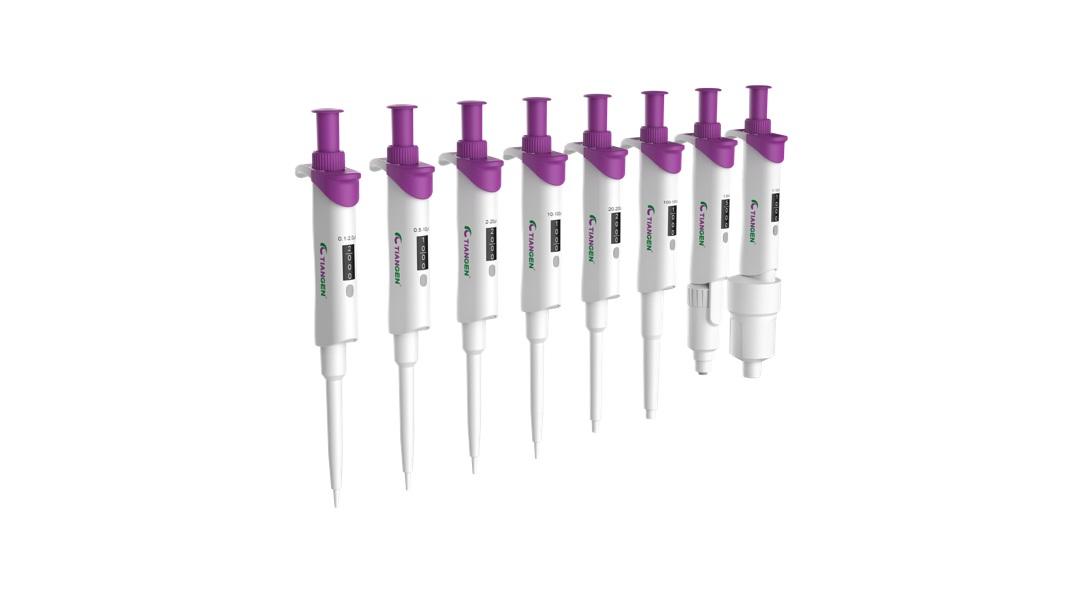
TGet Manual Pipette is a lightweight and ergonomic adjustable pipette designed for accurate and comfortable liquid handling in molecular biology, biotechnology, pharmaceutical, and laboratory research applications. Weighing as little as 68 g, it helps reduce hand fatigue during repetitive pipetting while maintaining reliable performance. Featuring one-hand volume adjustment, a clear 4-digit display, ISO 8655 calibration, an autoclavable lower assembly, and broad tip compatibility, TGet Manual Pipette provides an efficient and dependable solution for everyday laboratory workflows.
-
Features
- 68 g Lightweight Ergonomic Design: Helps reduce hand and wrist fatigue during repetitive pipetting.
- One-Hand Volume Adjustment: Fast volume setting for efficient laboratory workflows.
- ISO 8655 Certified Accuracy: Ensures reliable and reproducible liquid handling performance.
- Universal Tip Compatibility: Fits most standard pipette tips without restrictions.
- Fully Autoclavable Lower Assembly: Supports routine cleaning and sterilization.
- Easy-to-Read 4-Digit Display: Provides fast and accurate volume setting.
-
Model Selection Table
Available in eight volume ranges from 0.1 μL to 10 mL, TGet Manual Pipettes provide flexible liquid handling solutions for routine laboratory workflows.Cat. No. Volume Range Increment OSE-HP-01 0.1–2 μL 0.002 μL OSE-HP-02 0.5–10 μL 0.01 μL OSE-HP-03 2–20 μL 0.02 μL OSE-HP-04 10–100 μL 0.1 μL OSE-HP-05 20–200 μL 0.2 μL OSE-HP-06 100–1000 μL 1 μL OSE-HP-07 1–5 mL 5 μL OSE-HP-08 1–10 mL 10 μL All models are individually calibrated according to ISO 8655 standards and feature universal tip compatibility for reliable accuracy and flexible laboratory use. -
Applications
- PCR & qPCR Workflow Preparation
- Molecular Biology Research
- Cell Culture Liquid Handling
- Sample Preparation
- Reagent Preparation
- Routine Laboratory Pipetting
-
FAQ
What should I consider when selecting a manual pipette?
A: Important factors include volume range, accuracy, ergonomics, ease of operation, sterilization capability, and tip compatibility. For frequent laboratory use, lightweight pipettes with ergonomic designs can help reduce hand and wrist fatigue, while easy volume adjustment and reliable calibration support more efficient and reproducible workflows.Why is pipette ergonomics important?
A: Repetitive pipetting can place strain on the hand and wrist during daily laboratory work. Lightweight pipettes with balanced ergonomic designs can improve comfort, reduce user fatigue, and help maintain consistent pipetting performance throughout long working sessions.Which pipette volume range should I choose?
A: The appropriate volume range depends on the volumes most frequently used in your workflow. Low-volume pipettes are commonly selected for PCR, qPCR, and molecular biology applications, while larger-volume pipettes are used for reagent preparation and routine liquid transfer. Laboratories working with a wide range of volumes often benefit from using a complete pipette series to maintain accuracy and convenience across different applications.Why is ISO 8655 compliance important for pipettes?
A: ISO 8655 is an internationally recognized standard for piston-operated pipettes. Compliance helps verify that a pipette meets established requirements for accuracy and precision, providing greater confidence in liquid handling results and experimental reproducibility.Can a manual pipette be sterilized?
A: Yes. Pipettes with autoclavable components can be sterilized to help support contamination control. Models with a removable and autoclavable lower assembly allow more thorough cleaning and sterilization, making routine maintenance easier and helping reduce the risk of carryover contamination.
-
Sort by
-
Date
 Date()
Date
 Date()
Impact Factor
IF()
Impact Factor
IF()