Real-Time PCR Systems
-
-
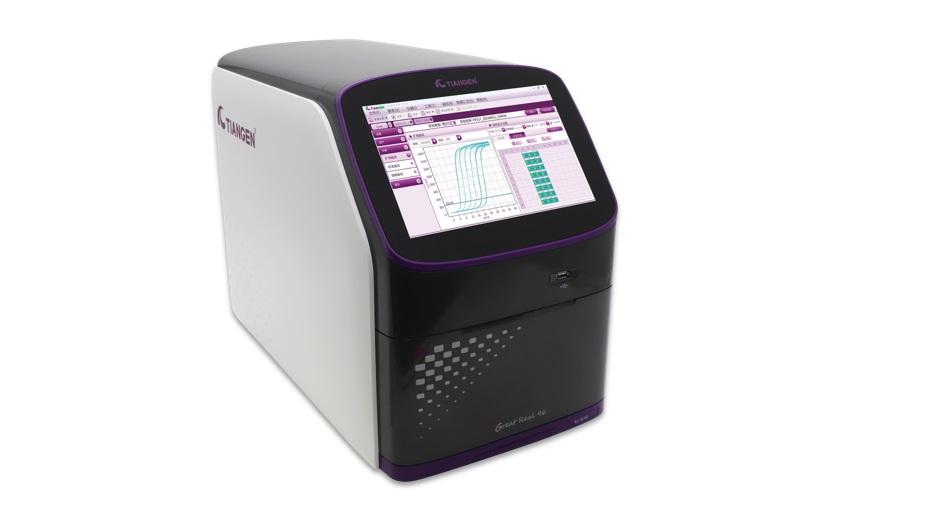
TGreat Real 96 qPCR Instrument
96-Well Real-Time PCR System for Sensitive and Reproducible Quantitative Analysis
Featuring fiber-optic fluorescence detection, synchronized CMOS signal acquisition, and optional 4-, 5-, or 6-channel configurations.
 Inquire
Catalog Number|Packaging
Mat. No |
Ref. No |
No. of preps |
|
OSE-R96-01-AM |
OSE-R96-01-AM | 1 Set |
|
OSE-R96-02-AM |
OSE-R96-02-AM | 1 Set |
|
OSE-R96-03-AM |
OSE-R96-03-AM | 1 Set |
-
Overview
The TGreat Real 96 qPCR Instrument features a 96×2 fiber-optic optical system, a high-intensity maintenance-free LED light source, synchronized CMOS signal acquisition, and 6-zone temperature control for sensitive, accurate, and reproducible qPCR analysis. With a built-in Windows operating system, a 10.1-inch touchscreen, and optional 4-, 5-, or 6-channel configurations, it delivers an efficient all-in-one workflow for quantitative PCR applications.
-
Key Features
Advanced Fiber-Optic Optical System
Independent 96×2 optical fibers separately transmit excitation light and collect fluorescence signals, minimizing signal loss and reducing edge effects. A high-intensity, maintenance-free LED light source improves excitation efficiency, while top-reading fluorescence detection provides broad consumable compatibility.
Fast Simultaneous Detection
A high-sensitivity CMOS detection system captures fluorescence signals from all 96 wells simultaneously, eliminating scan delays and well-to-well acquisition differences. Single-channel 96-well data collection can be completed in as little as 1 second.
Precision Thermal Control
Six-zone independent Peltier temperature control with gradient capability delivers excellent temperature uniformity and reliable amplification performance. Fast ramp rates of up to 6.5°C/s help improve workflow efficiency and assay optimization.
Flexible Consumable Compatibility
Top-reading fluorescence detection supports standard 96-well plates, strip tubes, and single tubes without requiring specialized consumables, providing greater flexibility and reducing operating costs.
All-in-One User Experience
A built-in Windows operating system and 10.1-inch touchscreen enable experiment setup, run monitoring, and data analysis directly on the instrument, eliminating the need for an external computer and saving valuable bench space.
Flexible Multiplex Analysis
Optional 4-, 5-, or 6-channel configurations support multiplex qPCR, gene expression analysis, HRM, and SNP applications, providing flexibility for a wide range of research requirements.
-
Technical Specifications
Parameter Specification Sample Capacity 96 × 0.2 ml, compatible with single tubes (transparent cap), 8-strip tubes (transparent cap), and 96-well plates (non-skirted or semi-skirted) Reaction Volume 5–100 μl Detection Channels 4 / 5 / 6 Dynamic Range 1–10¹⁰ Resolution Differentiate copy number differences as low as 1.5-fold in a single reaction Maximum Ramp Rate 6.5°C/sec Temperature Precision ≤ ±0.1°C Temperature Uniformity ≤ ±0.2°C Gradient Function 6-Zone Independent Temperature Control Operating System Built-in Windows Display 10.1-inch Touchscreen Interface USB, Bluetooth Light Source Long-life Maintenance-Free LED Weight 28 kg -
Model Comparison
Feature OSE-R96-01 OSE-R96-02 OSE-R96-03 Detection Channels 4 5 6 Channel 1 FAM, SYBR Green I FAM, SYBR Green I FAM, SYBR Green I Channel 2 HEX, VIC, TET, JOE, CY3, TAMRA HEX, VIC, TET, JOE, CY3, TAMRA HEX, VIC, TET, JOE, CY3, TAMRA Channel 3 ROX, Texas Red ROX, Texas Red ROX, Texas Red Channel 4 Cy5, Quasar-670 Cy5, Quasar-670 Cy5, Quasar-670 Channel 5 — Cy5.5, Quasar-705 Cy5.5, Quasar-705 Channel 6 — — Custom Multiplexing Capability Standard Advanced Advanced + Custom HRM Analysis ✓ ✓ ✓ SNP Analysis ✓ ✓ ✓ -
FAQ
What should I look for when choosing a real-time PCR system?
A: Key considerations include fluorescence detection technology, temperature uniformity, ramp rate, multiplexing capability, consumable compatibility, software usability, and data analysis features. Optical design and temperature control are often among the most important factors affecting data quality.How do fiber-optic and scanning optical systems differ in real-time PCR?
A: Fiber-optic optical systems independently deliver excitation light and collect fluorescence signals from each well, helping reduce optical loss and minimize edge effects. Compared with scanning-based systems, they can improve fluorescence consistency across the entire plate and reduce signal acquisition variability.Why is simultaneous fluorescence acquisition important in qPCR?
A: Simultaneous fluorescence acquisition captures signals from all wells at the same time instead of detecting wells sequentially. This approach eliminates well-to-well detection delays, improves data consistency, and can reduce overall acquisition time.Can a real-time PCR system use standard PCR plates and tubes?
A: Many modern real-time PCR systems support standard PCR plates, strip tubes, and single PCR tubes. Systems with top-reading optical designs often provide broader consumable compatibility without requiring proprietary plastics.How important is temperature uniformity in real-time PCR?
A: Temperature uniformity directly affects amplification consistency across all wells. Systems with precise temperature control and uniform heat distribution help improve reproducibility, assay performance, and confidence in quantitative results.Is a built-in computer beneficial for qPCR workflows?
A: A real-time PCR instrument with an integrated operating system can simplify workflow management by allowing experiment setup, run monitoring, and data analysis directly on the instrument. This may reduce bench-space requirements and eliminate the need for an external computer.
Experimental Example
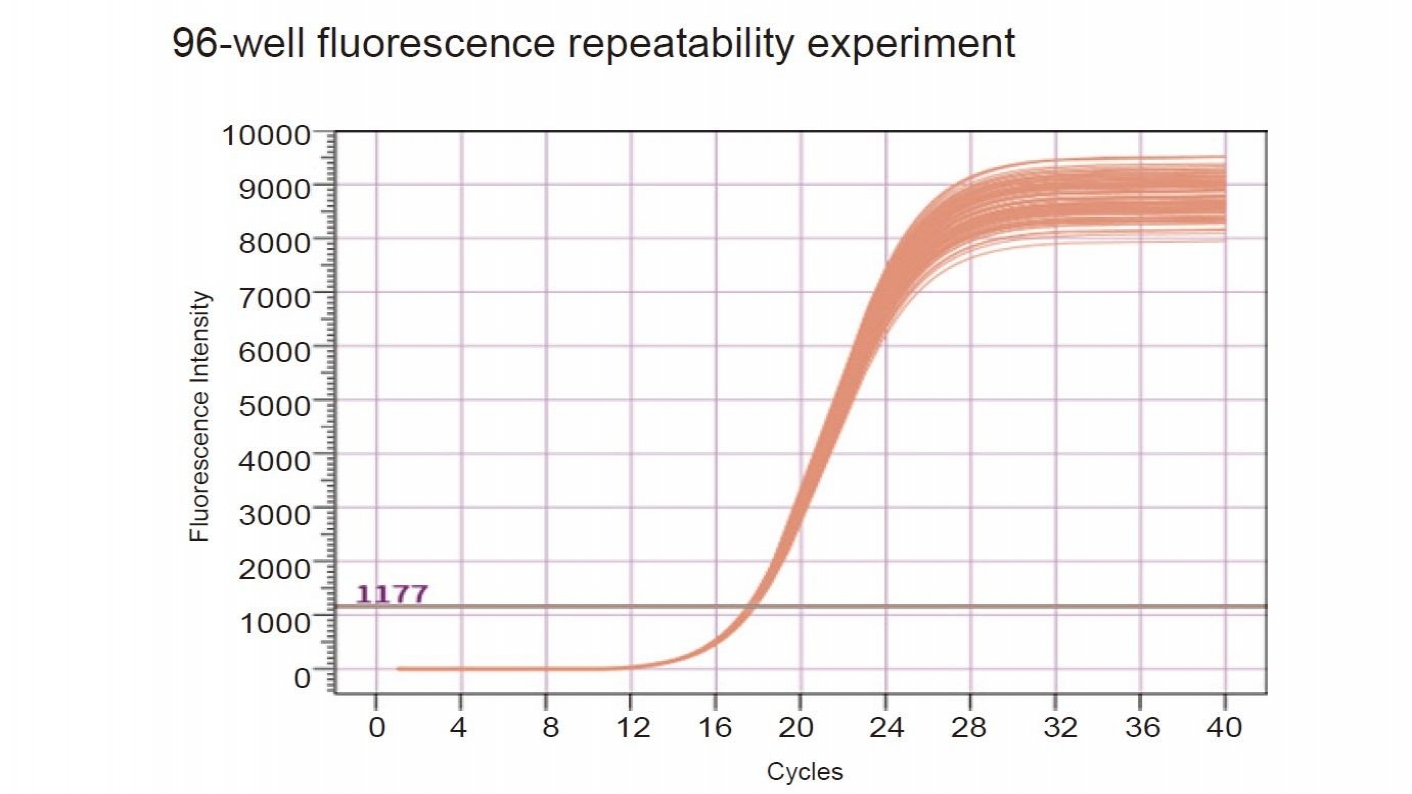
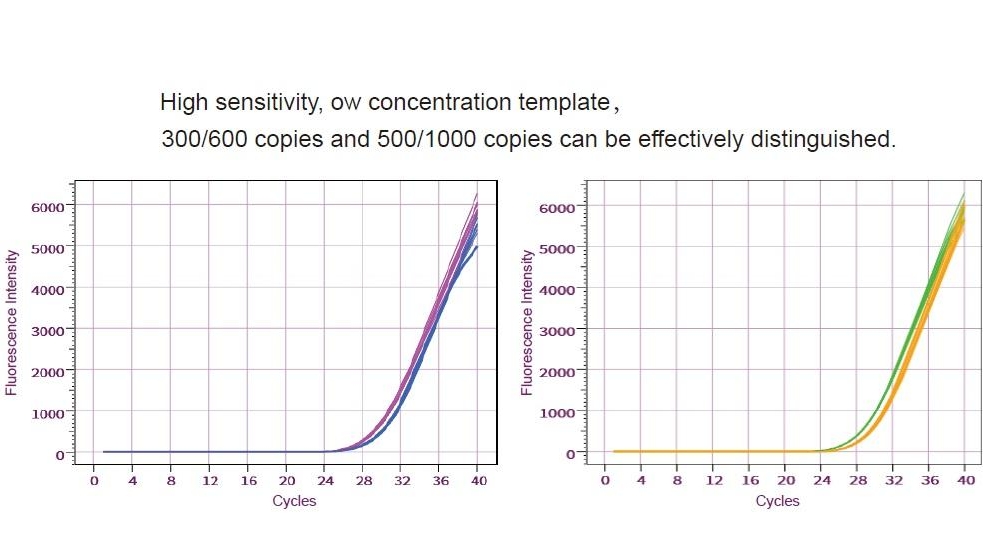
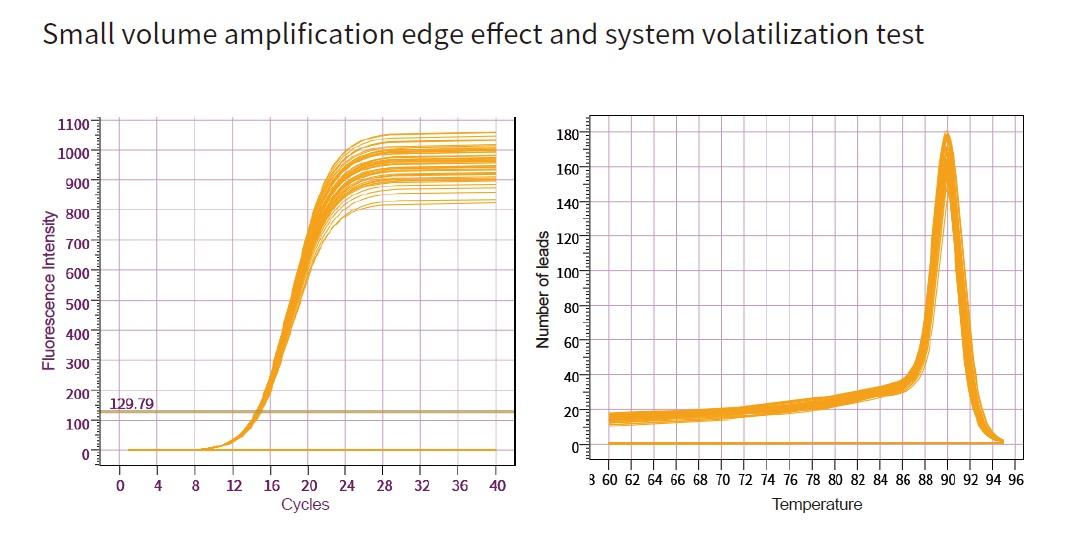
Excellent Repeatability with No Edge Effects
Target gene: corn transgene NK603
Detection kit: FastReal qPCR PreMix (SYBR Green) (TIANGEN, 4995063/4995064/4995164)
Evaluation: The average Ct value was 17.68, the standard deviation was 0.09, and the CV was 0.50%, indicating excellent repeatability and reproducibility across all 96 wells of the TGreat Real 96 qPCR Instrument.
-
Sort by
-
Date
 Date()
Date
 Date()
Impact Factor
IF()
Impact Factor
IF()